Fall Prevention Tips for Seniors at Home
Reviewed by MedWise Caring Clinical Team · Updated September 29, 2026 · 6 min read
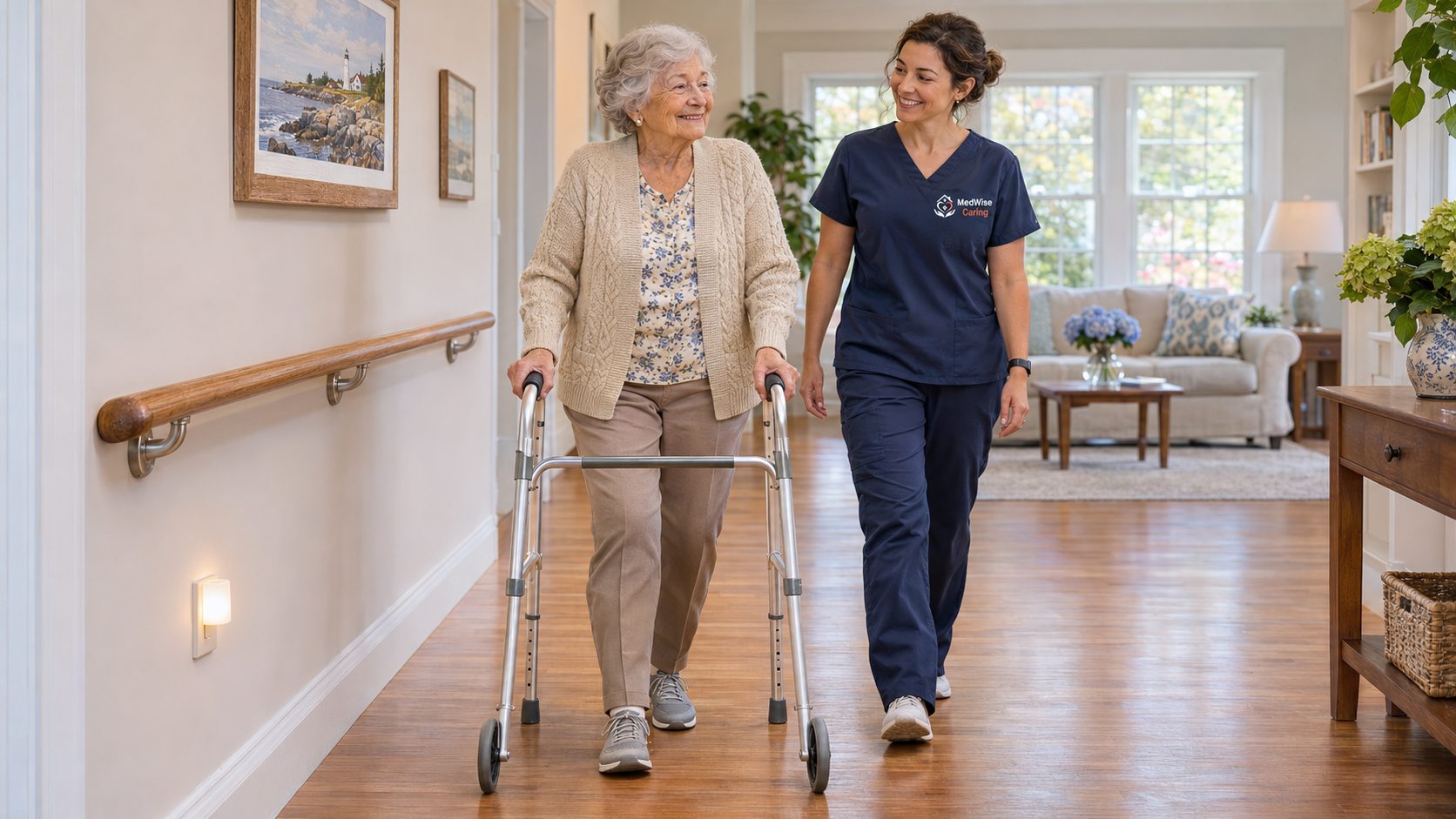
The short answer: Most falls at home are preventable. The changes that make the biggest difference are better lighting (especially at night), removing tripping hazards, grab bars in the bathroom, sturdy shoes, a yearly medication and vision review, and regular strength and balance exercise. In New England, add ice-safe entryways and walkways from November through March.
Falls are the leading cause of injury for older adults. More than one in four adults age 65 and older reports a fall each year, and in 2024 more than 43,000 Americans 65 and older died from falls (National Safety Council, citing CDC data). Yet fewer than half of older adults who fall tell their doctor, often because they fear losing their independence.
The good news: falling is not a normal part of aging, and small, specific changes cut the risk meaningfully.
Room-by-room safety checklist
Walk through the home with this list. Print it, and do it again every season.
Entryways and stairs
- Handrails on both sides of every staircase, inside and out
- Light switches at the top and bottom of stairs
- Contrasting tape on the edge of each step if vision is weak
- A bench by the door for putting on boots and shoes
Living areas
- Throw rugs removed or secured with non-slip backing
- Cords and clutter out of walkways
- Furniture arranged with clear, wide paths
- A sturdy chair with armrests that’s easy to rise from
Bedroom
- A lamp or touch light reachable from bed
- Night lights from the bed to the bathroom
- Bed at a height where feet rest flat on the floor when sitting
- Phone or medical alert device within reach of the bed
Bathroom (where many serious falls happen)
- Grab bars by the toilet and in the tub or shower (towel bars are not grab bars)
- Non-slip mat inside and outside the tub
- Shower chair and handheld shower head
- Raised toilet seat if rising is hard
Kitchen
- Everyday items stored between waist and shoulder height
- A sturdy step stool with a handle (never a chair)
- Spills wiped up right away
New England winter: the extra checklist
Massachusetts winters bring ice, early darkness and slushy floors. Before the first storm:
- Line up snow and ice removal for steps, walkways and the path to the mailbox and car
- Keep a bucket of ice melt or sand by the door
- Add bright outdoor lighting on a timer or motion sensor
- Wear boots with real tread; consider removable ice grips for walking outside
- Put a boot tray and absorbent mat inside the door to keep floors dry
- On icy days, ask for help with errands rather than going out
The health side of fall prevention
Home changes matter, but many falls start with the body. Ask the doctor about these at every annual visit:
| Risk factor | What to ask or do |
|---|---|
| Medications | Review all prescriptions and over-the-counter medicines; sleep aids, some blood pressure and anxiety medicines can cause dizziness |
| Vision | Yearly eye exam; be careful with new glasses and bifocals on stairs |
| Feet and shoes | Treat foot pain; choose supportive, non-slip shoes over slippers or socks |
| Strength and balance | Ask about physical therapy; look for evidence-based programs such as A Matter of Balance or Tai Chi, offered at many Councils on Aging |
| Blood pressure | Ask about dizziness when standing; rise slowly, sitting on the edge of the bed first |
| Bone health | Ask whether a bone density test makes sense |
The CDC’s STEADI program offers a free checklist your doctor may use to assess fall risk (CDC STEADI).
If a fall happens
- Stay still for a moment. Check for pain, especially in hips, head and wrists.
- Don’t rush up. If unhurt, roll to your side, crawl to a sturdy chair, and rise slowly.
- Call for help if you’re hurt, can’t get up, or hit your head, especially if taking a blood thinner. Call 911 for severe pain, bleeding, confusion or inability to move.
- Tell the doctor, even if you feel fine. One fall raises the chance of another, and the cause can often be found and fixed.
How MedWise Caring helps prevent falls
A MedWise Caring registered nurse can do an in-home safety assessment and point out specific risks in your home, then build a care plan that targets them. Caregivers help with the riskiest moments of the day: bathing, getting in and out of bed, and nighttime trips to the bathroom. Where ordered, our therapy services work on strength and balance at home.
Frequently asked questions
What is the most common cause of falls in older adults?
Usually a combination: muscle weakness and balance problems, medication side effects, vision changes, and hazards like rugs, poor lighting and slippery bathrooms.
Where in the home do most falls happen?
Bathrooms, stairs and bedrooms (especially at night) are the highest-risk areas.
Do grab bars really help?
Yes. Properly installed grab bars by the toilet and in the shower are one of the simplest, most effective changes. Towel racks can't hold a person's weight.
Should my parent get a medical alert device?
If they live alone or have fallen before, it's worth it, as long as they'll actually wear it, including in the shower.
Take the next step with MedWise Caring
Request a free in-home assessment to identify fall risks and plan support at home.
Request a Free Assessment → MedWise Caring · Clinically led, technology-enabled home care across Greater Boston, Massachusetts
Phone: (781) 903-7622 · RN-led care team available 24/7
Fax: (781) 903-7624 · Email: info@medwisecaring.com · Web: www.medwisecaring.com
This article is general information, not medical advice. Talk with a doctor about fall risk.